The Art of Food, According to David Shrigley
by Electric Gallery
Thursday 23 July 2026
The Art of Food, According to David Shrigley
Food is rarely just food in the world of David Shrigley.
A lemon becomes an unreasonable challenge. Ice cream is declared essential for survival. A mushroom is offered as a prize before being revealed as poisonous. Even a cucumber can be judged for failing to meet expectations.
Across his paintings, drawings and prints, Shrigley regularly turns to the everyday objects that surround us. Food is particularly suited to his art because it is instantly recognisable, rich with personal associations and already governed by countless preferences, habits and unwritten rules.
Through bold colour, deliberately direct imagery and perfectly judged statements, David Shrigley’s food prints transform familiar ingredients into observations about pleasure, disappointment, anxiety and the absurdity of human behaviour.
David Shrigley’s Distinctive Sense of Humour
David Shrigley is one of Britain’s most recognisable contemporary artists, known for combining roughly rendered images with handwritten text and a distinctly deadpan sense of humour.
His work can initially appear simple. The figures are uneven, the lettering is deliberately unpolished and the objects are often isolated against plain backgrounds. Yet this directness is central to its impact.
Shrigley does not need elaborate compositions to communicate an idea. A piece of fruit and a few carefully chosen words are often enough.
The humour usually arrives through the relationship between the image and the statement surrounding it. The words may contradict what we are seeing, introduce an unexpected threat or give an ordinary object far more importance than it deserves.
In The Moment Has Arrived, for example, the language suggests a momentous event. The event in question is simply that a banana has become ripe.
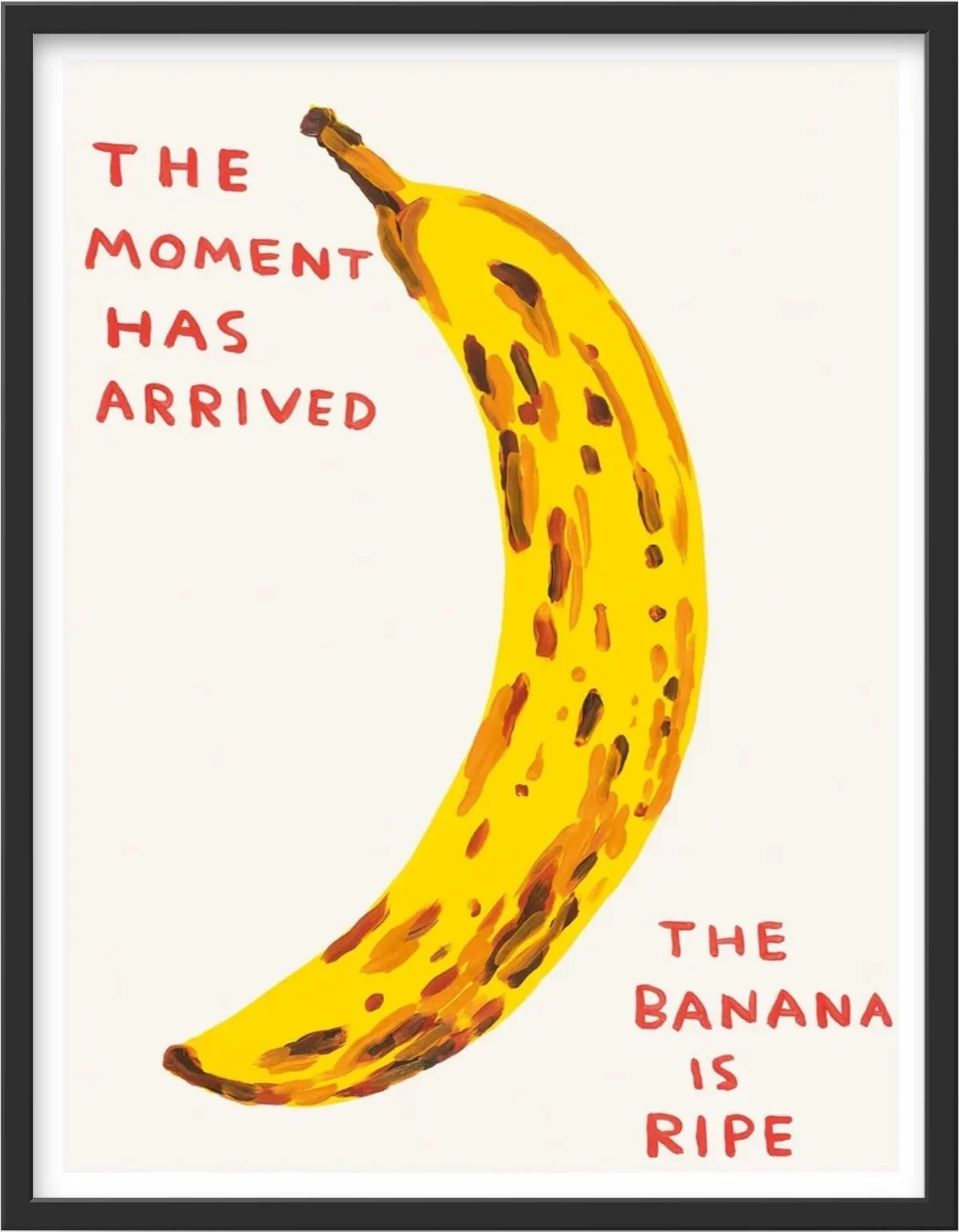
It is an everyday occurrence presented with the gravity of a major announcement. and a perfect example of Shrigley’s ability to uncover comedy in the ordinary.
Why Food Appears So Often in David Shrigley’s Art
Food is universal, but our relationships with it are surprisingly personal.
It can represent comfort, reward, guilt, indulgence, routine or control. People hold strong opinions about what should be eaten, how it should be prepared and what other people’s choices supposedly reveal about them.
Shrigley exaggerates these feelings until they become ridiculous.
In If You Don’t Like Tomatoes, a simple dislike is treated as grounds for complete rejection. Work Hard Play Hard takes a familiar motivational phrase and completes it with the instruction to eat a huge pizza. You Must Eat Ice Cream turns a treat into an apparent requirement for continued survival.
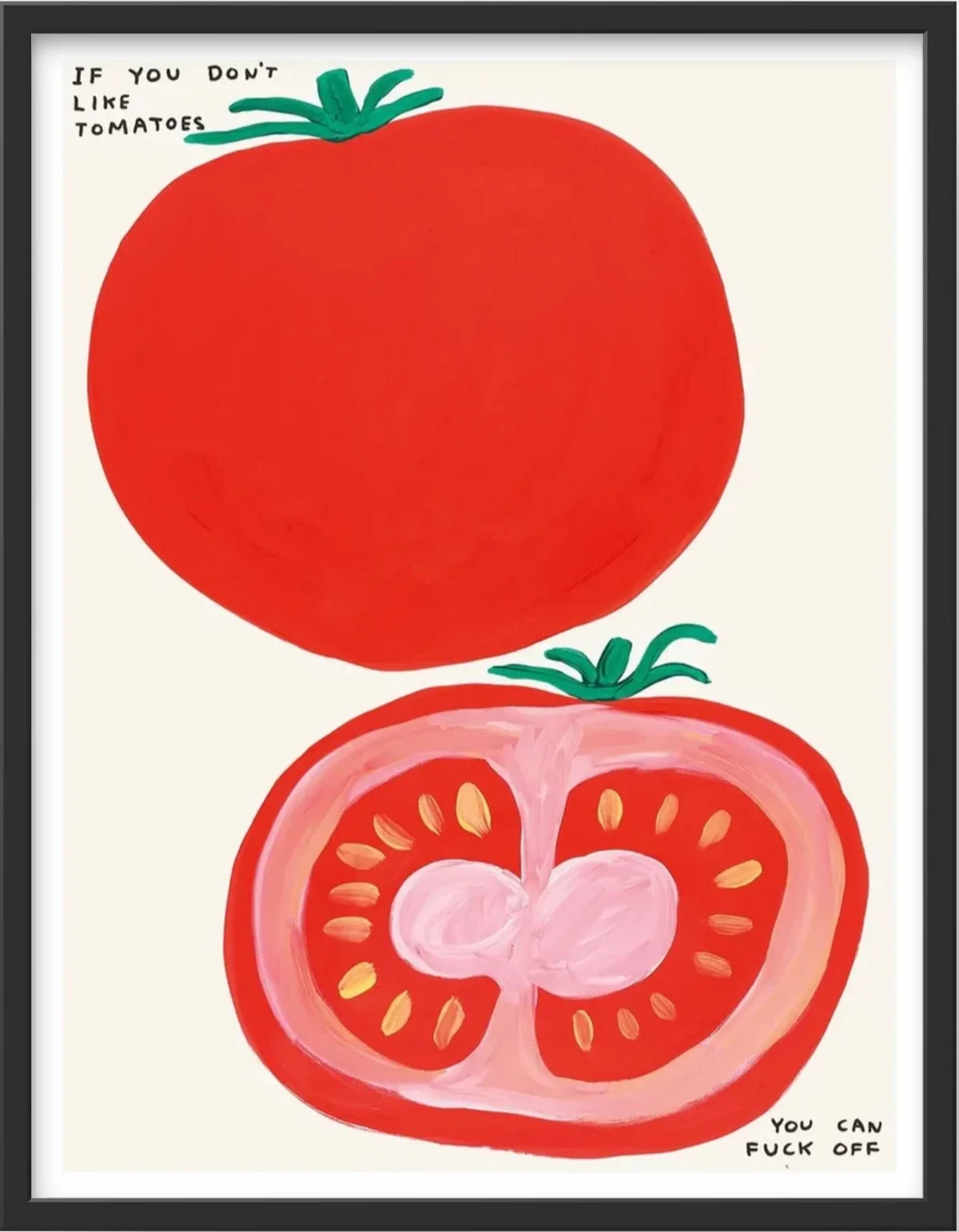
The situations are absurd, but the behaviour behind them feels oddly familiar. We routinely attach emotion and meaning to food, whether celebrating with cake, seeking comfort in chocolate or becoming irrationally irritated by someone else’s order.
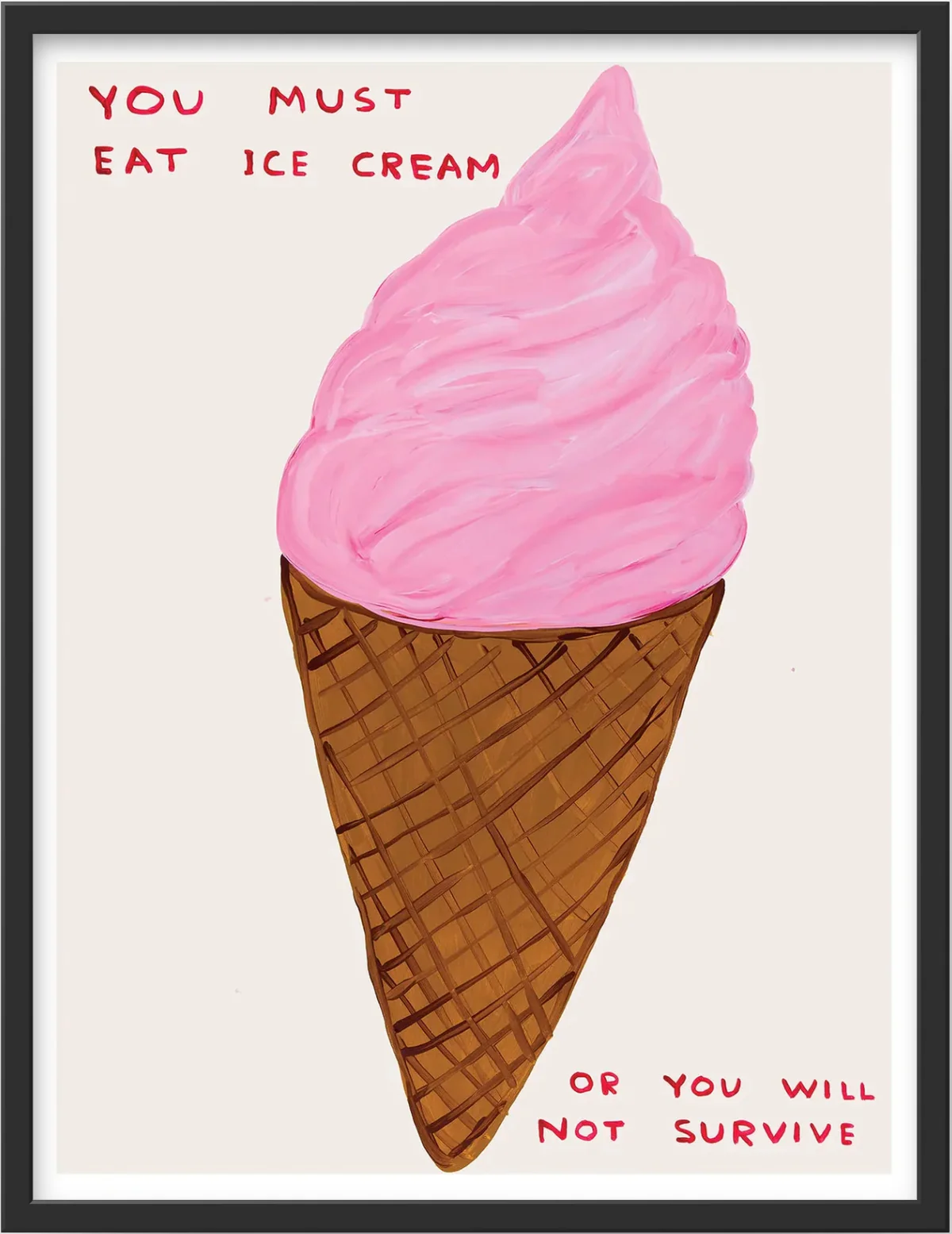
Shrigley takes those reactions and states them with complete confidence.
Familiar Sayings with an Unfamiliar Conclusion
Language is central to David Shrigley’s art.
He often begins with a recognisable phrase, instruction or piece of everyday wisdom before redirecting it somewhere unexpected. The opening feels familiar enough to draw us in, but the conclusion disrupts what we assumed the work was going to say.
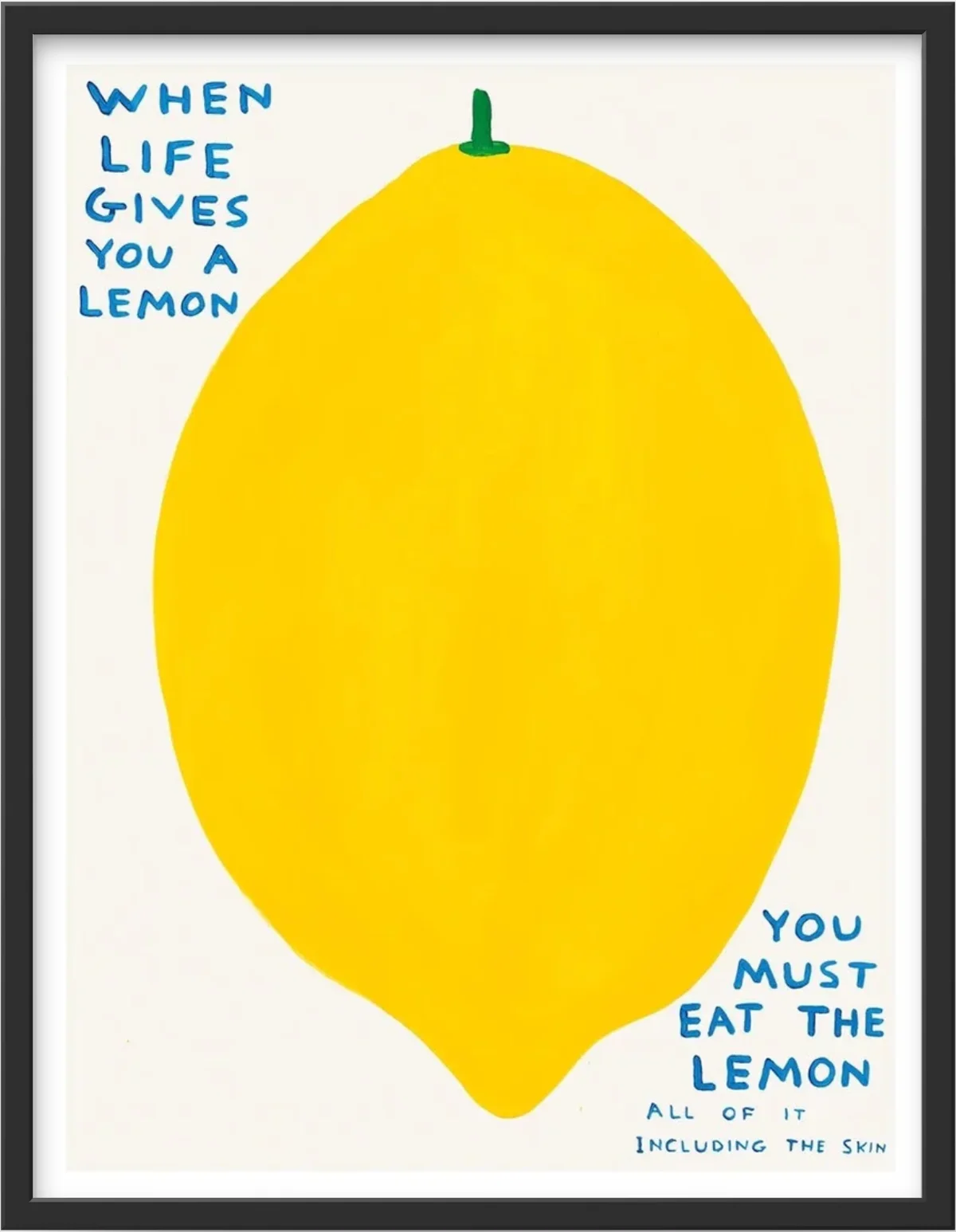
When Life Gives You A Lemon begins with one of the most familiar expressions about optimism and resilience. Shrigley offers no lemonade and no reassuring metaphor. Instead, the viewer is instructed to eat the entire lemon, including the skin.
The familiar saying is not simply repeated. It is taken literally and pushed towards an uncomfortable conclusion.
A similar reversal appears in You Win This Mushroom. Winning usually implies success and reward, but the celebratory announcement is immediately undermined by the revelation that the mushroom is poisonous.
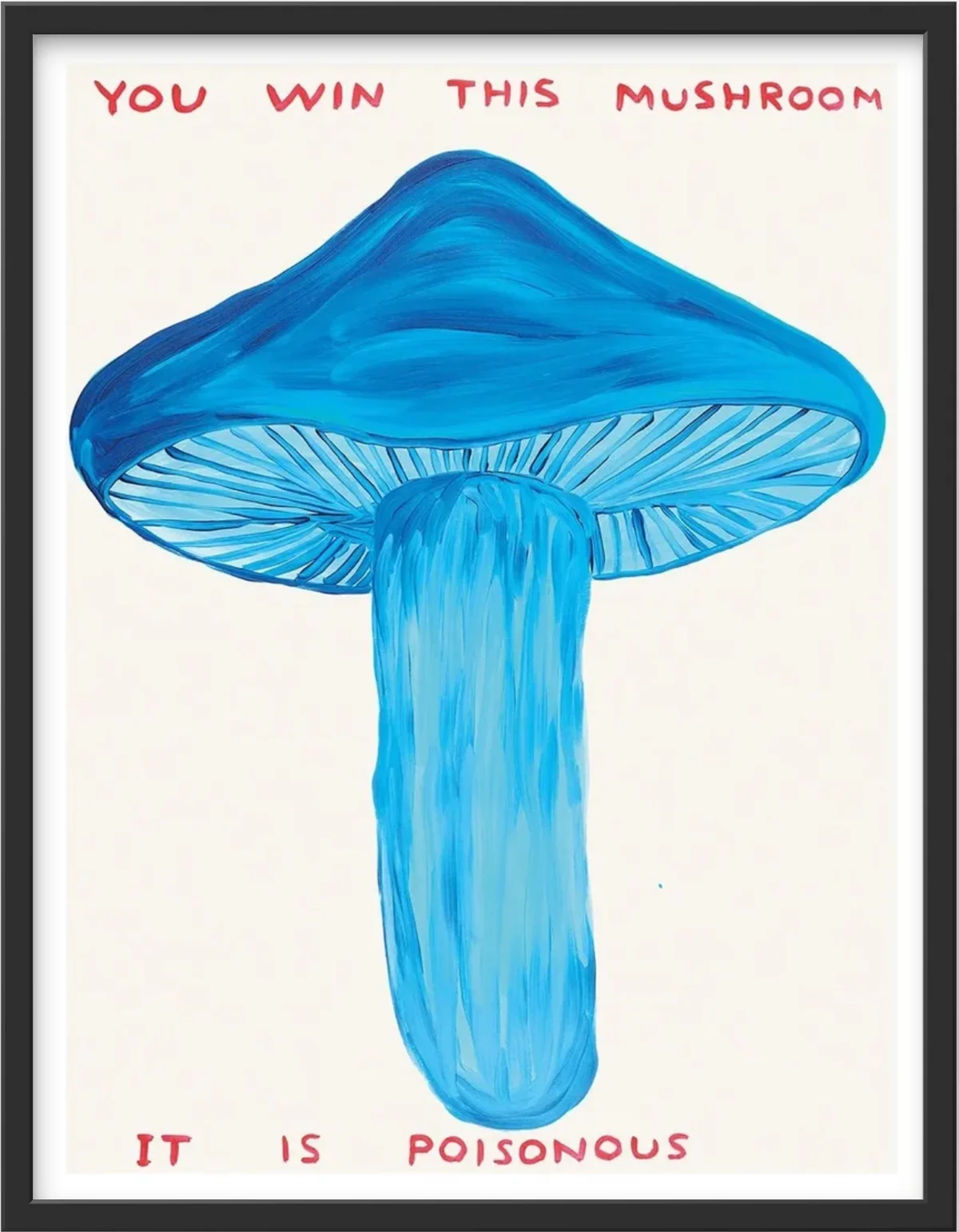
These sudden changes in direction are fundamental to Shrigley’s humour. His statements often sound like fragments of advice from a person whose logic is internally consistent but completely unreasonable.
Comfort, Indulgence and Blame
Many of David Shrigley’s food prints focus on the things we associate with pleasure.
Ice cream, chocolate and pizza are indulgent, familiar and emotionally loaded. They are also surrounded by ideas about reward, moderation and guilt, giving Shrigley plenty of material to work with.
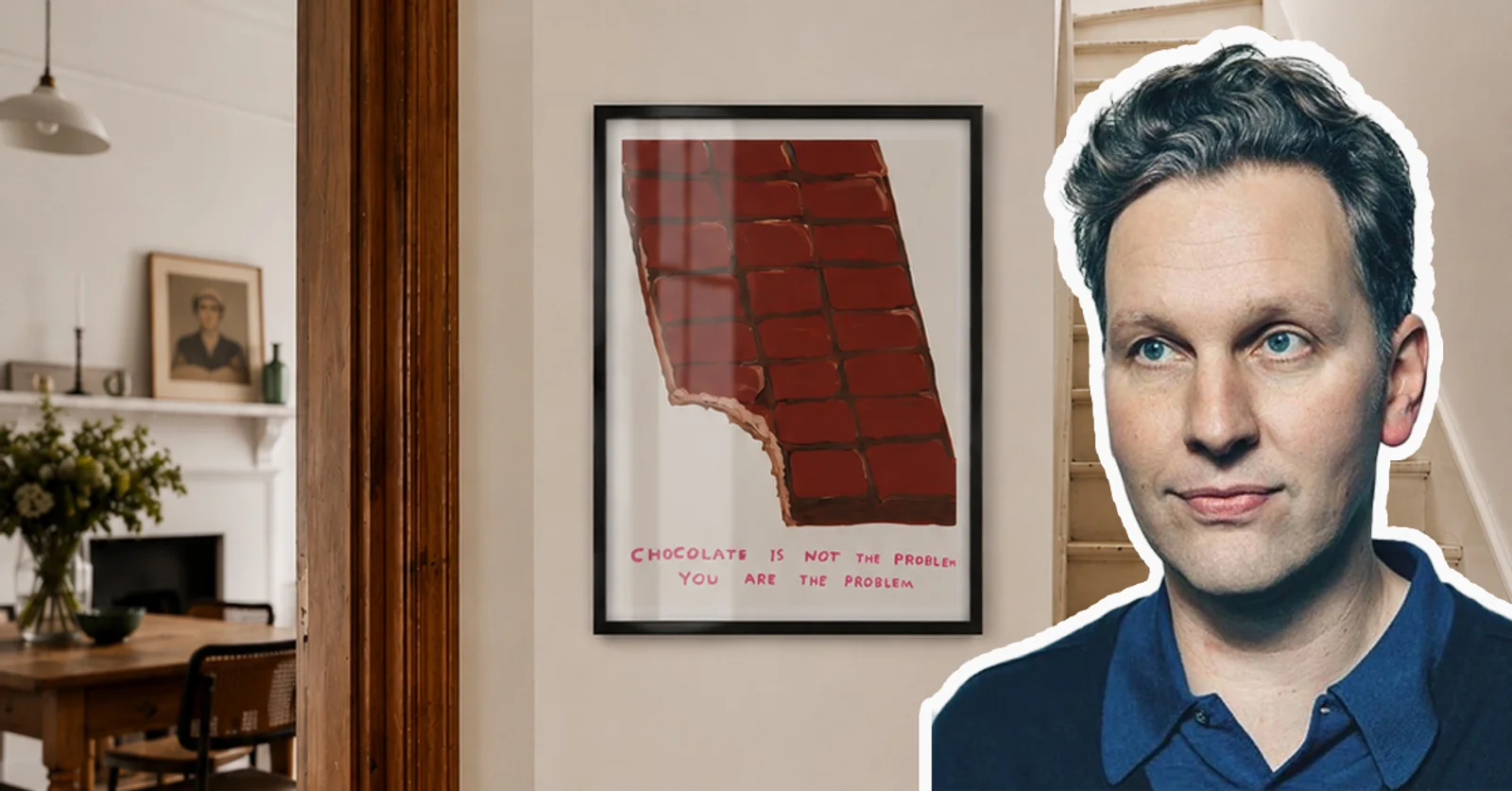
In Chocolate Is Not the Problem, the chocolate is firmly cleared of responsibility. The blame is redirected towards the viewer with characteristic bluntness.
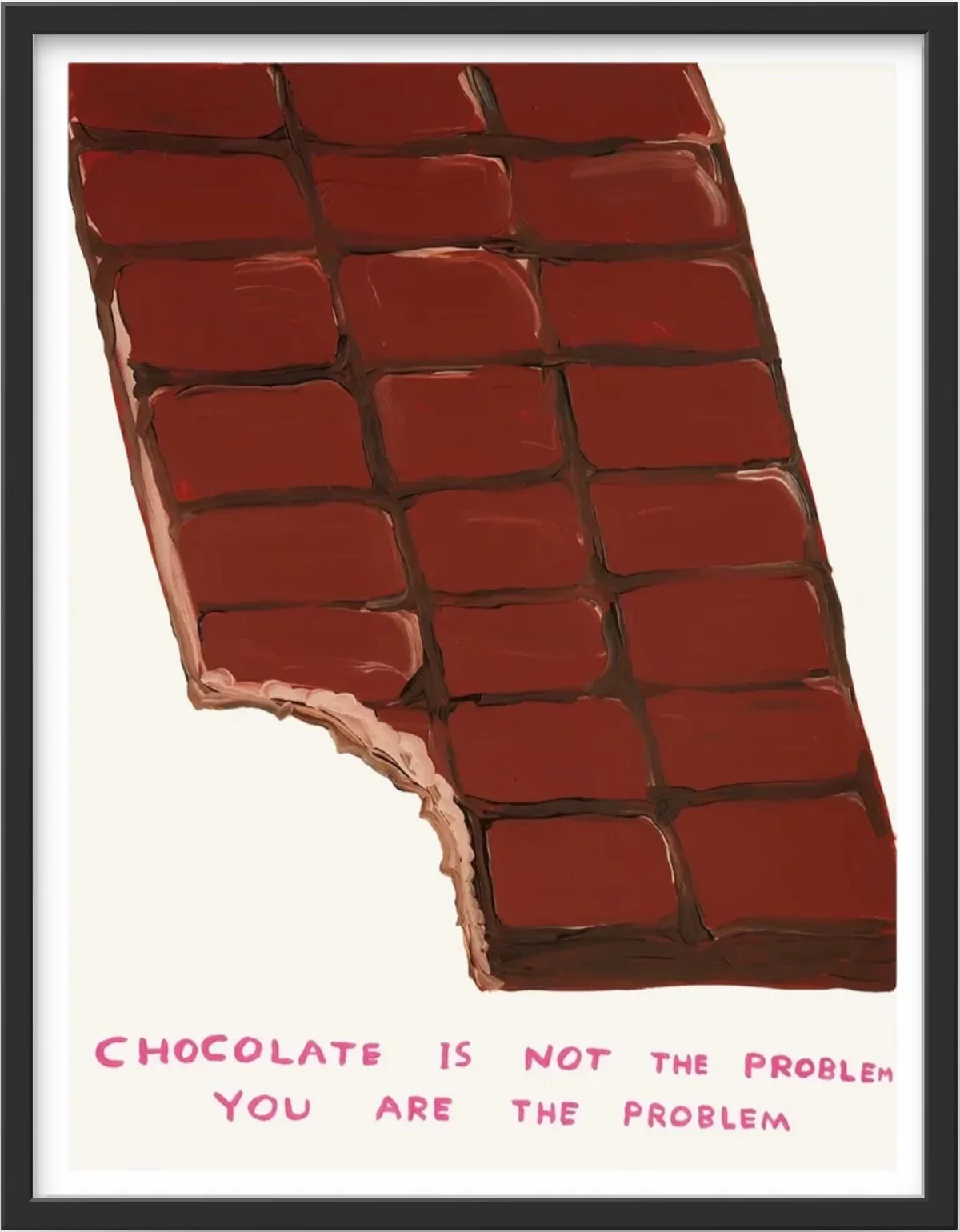
The joke is immediate, but it also captures the strange negotiations people have with food. The object itself is innocent; the problem lies in behaviour, appetite or self-control.
Chocolate Is Not the Problem is also one of the harder-to-find works within Electric Gallery’s current food-focused selection. Alongside They Were Too Long, it offers collectors an opportunity to acquire one of the less commonly available David Shrigley prints included in the collection.
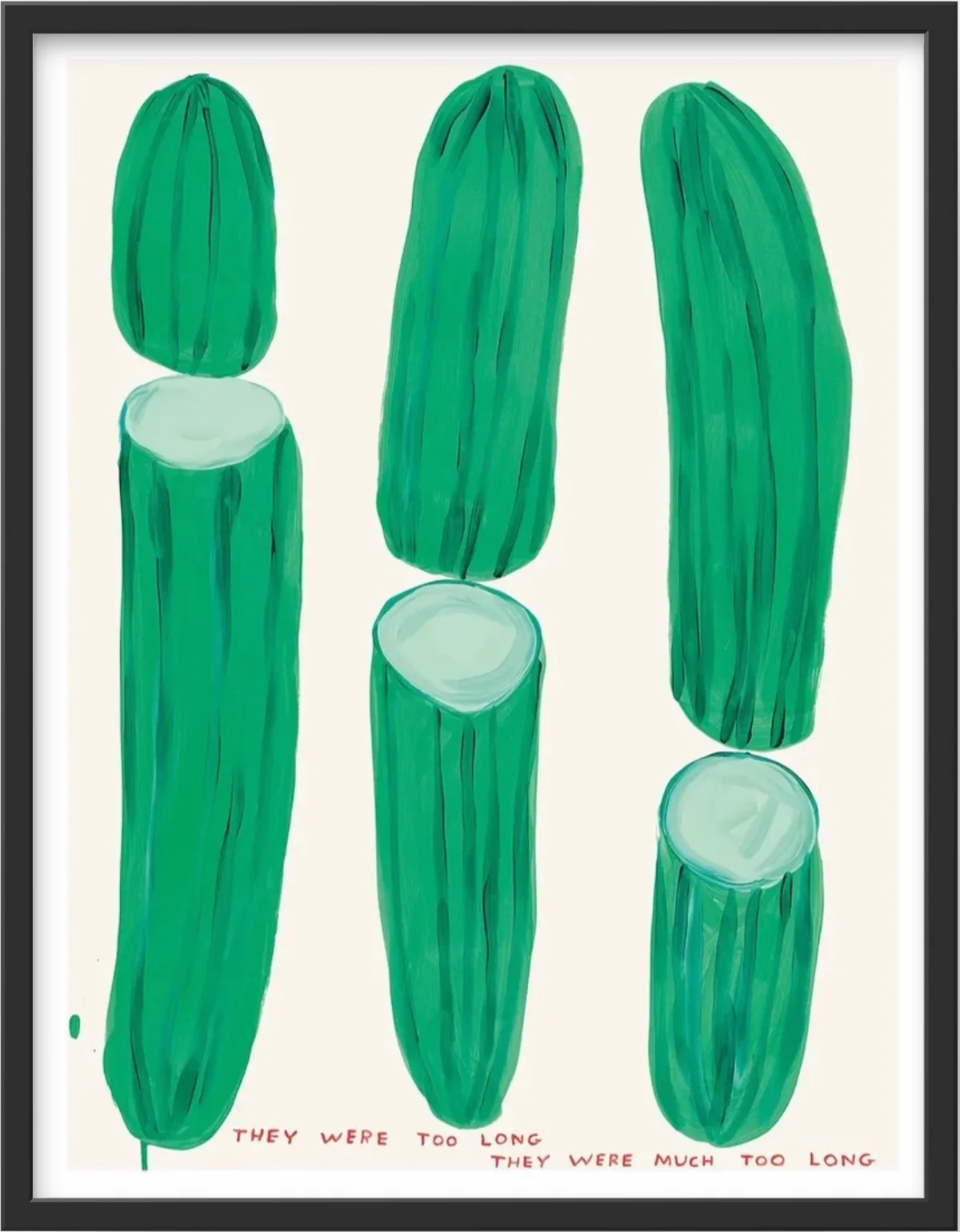
Where the chocolate print is direct and accusatory, They Were Too Long finds humour in an apparently insignificant complaint. Several cucumbers have been deemed not merely too long, but much too long.
Nothing explains why their length matters. The certainty of the criticism is enough.
This ability to give minor inconveniences an exaggerated sense of importance appears throughout Shrigley’s art. His work reflects the tendency to create rules, standards and problems where none may have previously existed.
The Strange Authority of Shrigley’s Statements
Shrigley’s handwritten words often resemble instructions, warnings or public notices.
They tell the viewer what to do, what to believe and how to behave, yet the authority behind them is never identified. We are simply expected to accept that we must eat the ice cream, consume the lemon or avoid the poisonous prize.
Because the lettering appears informal, the statements can feel like private thoughts that have somehow escaped into public view. They are personal, irrational and delivered without hesitation.
Truth takes this idea in another direction. The work presents truth as though it were a packaged product, complete with water and sugar among its listed ingredients.
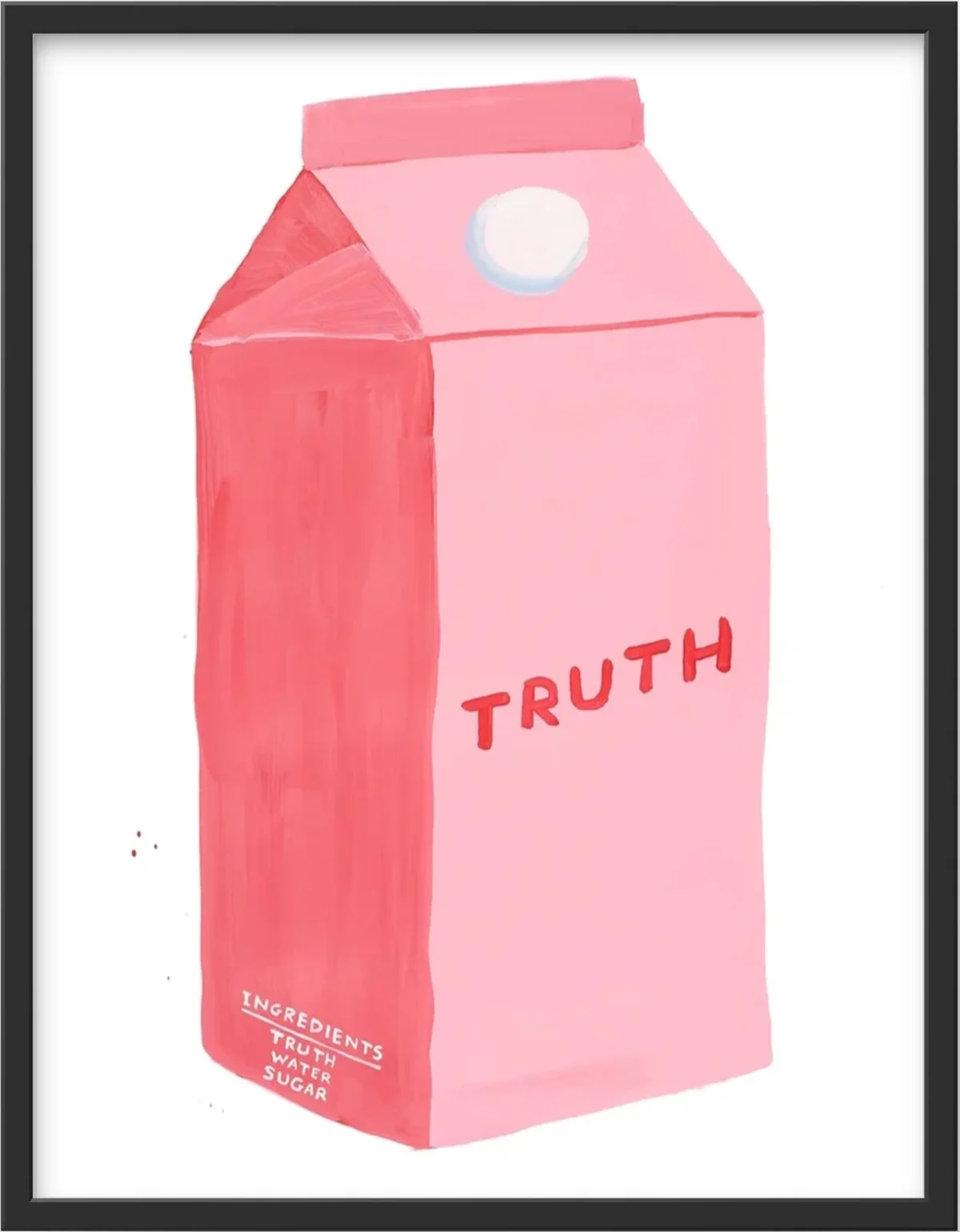
The image borrows the familiar language of food packaging to address something far less tangible. It raises questions about whether truth can be diluted, sweetened or conveniently presented for consumption.
Like much of Shrigley’s work, it is humorous without being empty. The joke is immediate, but the idea continues to develop after the first encounter.
Finding Reassurance in the Absurd
Although Shrigley’s humour can be dark, confrontational or pessimistic, it is not always without hope.
The Chaos depicts a cup overflowing with coffee uncontrollable, accompanied by the reassurance that eventually it will pass.
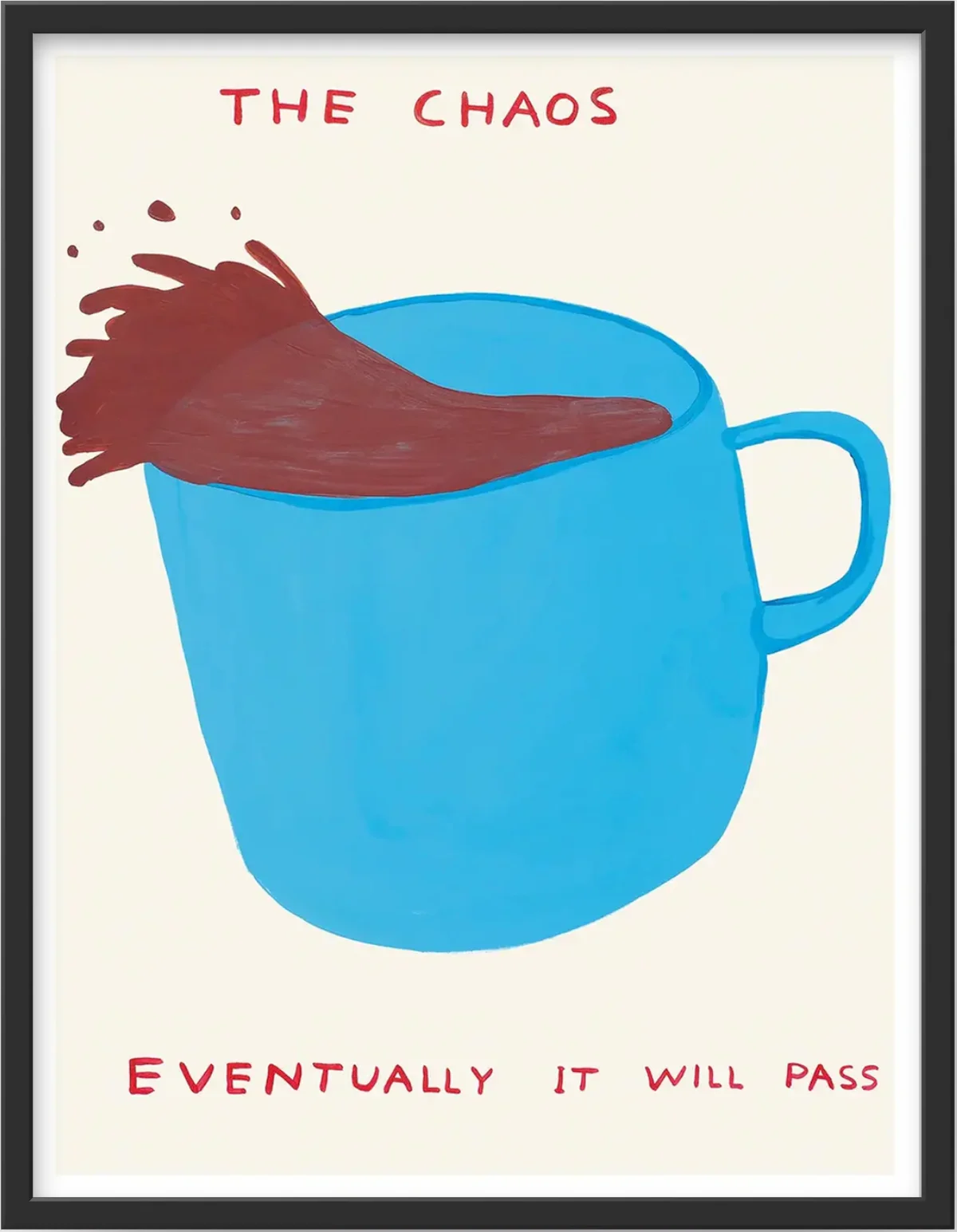
It is a simple statement, but it captures something recognisable about difficult experiences. Chaos can feel all-consuming while it is happening, yet even the most overwhelming situations are temporary.
Shrigley’s reassurance is delivered in the same blunt visual language as his threats and insults. There is no elaborate explanation or inspirational flourish. The chaos will pass because that is simply what chaos does.
This mixture of absurdity and emotional honesty is one reason his art connects with such a broad audience. The works are funny, but they often reflect genuine frustrations, anxieties and moments of relief.
David Shrigley Food Prints in the Home
Food-inspired artwork naturally suits kitchens and dining rooms, but David Shrigley’s prints offer something very different from traditional still-life art.
Rather than presenting food as beautifully arranged or aspirational, Shrigley uses it as a starting point for personality and conversation.
The bold yellow lemon, bright red tomatoes and oversized pink ice cream introduce immediate colour, while the accompanying statements give each work its own attitude. They can be displayed individually as a strong focal point or grouped together to create a playful contemporary gallery wall.
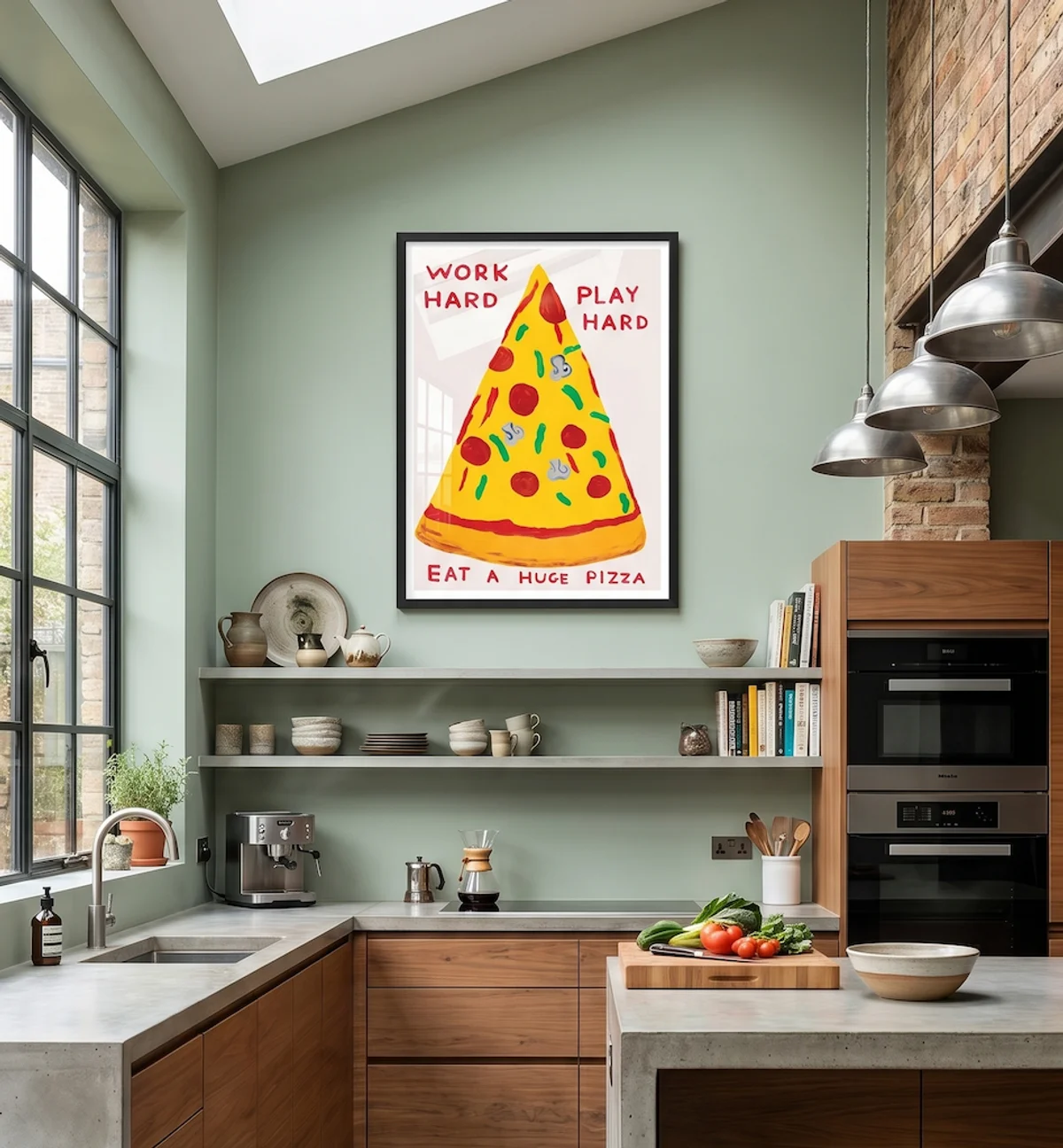
A print such as Work Hard Play Hard can bring energy to a social kitchen or dining space, while The Chaos offers a more understated piece of everyday reassurance. If You Don’t Like Tomatoes makes a considerably less welcoming statement to visitors.
Their appeal, however, extends beyond food-related rooms. These are ultimately works about people: our habits, contradictions, anxieties and ability to make simple things unnecessarily complicated.
The Art of Food, According to David Shrigley
Taken together, these ten David Shrigley food prints form a feast of bold colour, dark humour and unconventional advice.
They present a world in which bananas announce important moments, cucumbers disappoint, chocolate refuses responsibility and ice cream becomes a matter of survival.
The ingredients may change, but the underlying approach remains unmistakably Shrigley. Familiar objects are paired with statements that are direct enough to be understood immediately, yet strange enough to remain in the mind.
Food gives Shrigley a universally recognisable language. He then uses it to expose how irrational, emotional and entertaining everyday life can be.
Explore the featured selection of David Shrigley food prints, including the harder-to-find Chocolate Is Not the Problem and They Were Too Long, alongside the wider David Shrigley collection available at Electric Gallery.
Frequently Asked Questions
Why does David Shrigley use food in his art?
Food is familiar and instantly recognisable, allowing Shrigley to communicate an idea quickly. He uses fruit, vegetables, desserts and everyday meals to explore pleasure, anxiety, personal preference and absurd human behaviour.
What style of art is David Shrigley known for?
David Shrigley is known for a direct, deliberately unpolished style combining bold imagery with handwritten text. His work often uses deadpan humour, unexpected statements and observations about everyday life.
What are some of David Shrigley’s food prints?
His food-related works include When Life Gives You A Lemon, You Must Eat Ice Cream, If You Don’t Like Tomatoes, Work Hard Play Hard, Chocolate Is Not the Problem, They Were Too Long and You Win This Mushroom.
Which food-related David Shrigley prints are harder to find?
Within Electric Gallery’s current selection, Chocolate Is Not the Problem and They Were Too Long are two of the harder-to-find works.
Are David Shrigley food prints suitable for kitchens?
Their food subject matter, bold colours and humorous text make them particularly well suited to kitchens and dining spaces. They can also work throughout the home as playful examples of contemporary British art.
Where can I buy David Shrigley prints?
Electric Gallery offers a curated collection of David Shrigley prints, including food-related works and other examples of the artist’s distinctive humour and visual style.