Ten Years Without David Fucking Bowie
by Electric Gallery
Wednesday 7 January 2026
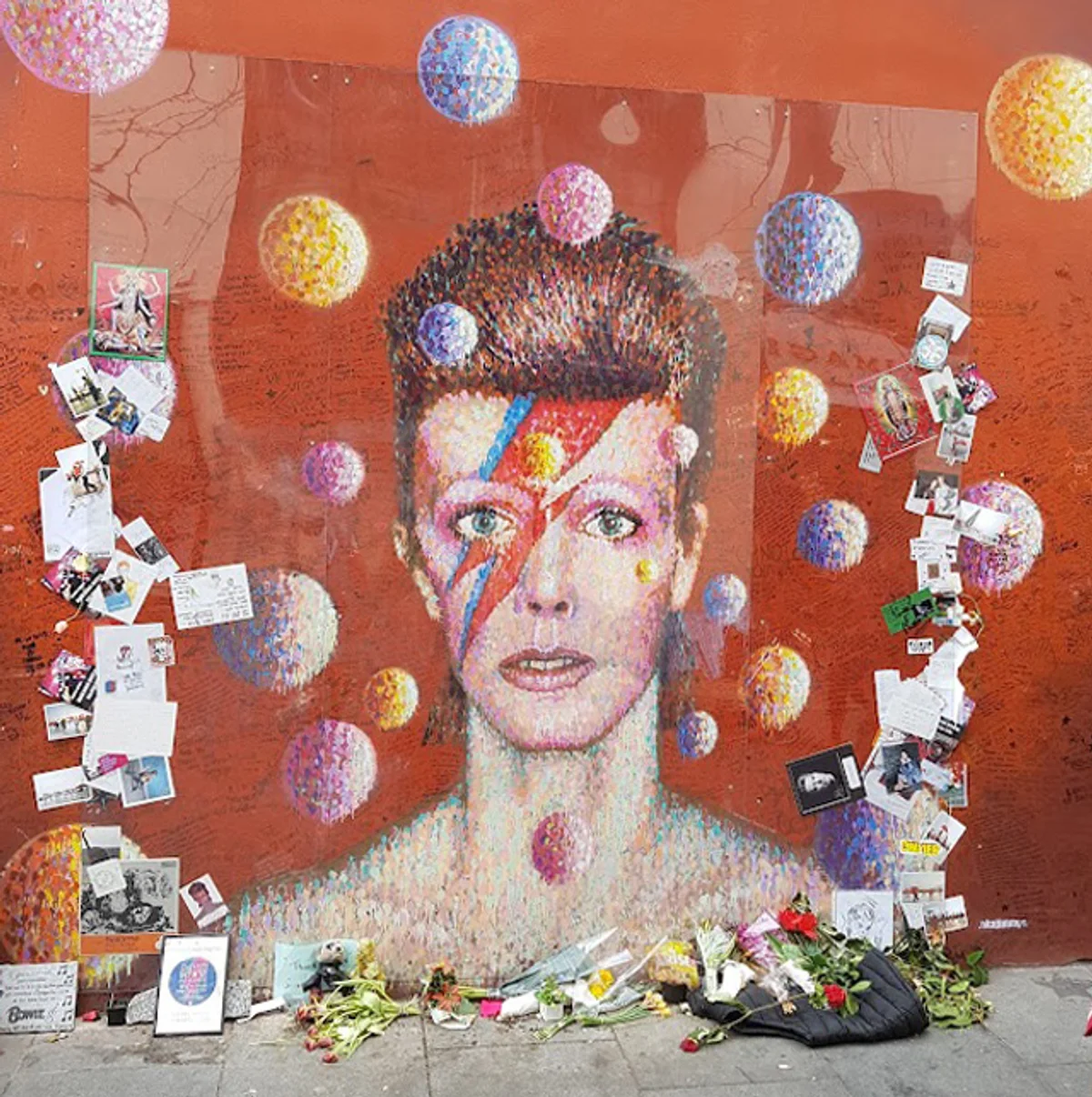
Ten years ago, David Bowie died and the world has never quite felt right since. Not because everything that followed can be traced back to that moment, but because Bowie represented something increasingly rare: an artist operating without fear, compromise, or the need to explain himself.
Something shifted after Bowie.
The world didn’t unravel because of his death, but his absence coincided with a noticeable narrowing of mainstream culture. Fewer risks. Less ambiguity. Less permission to be strange, theatrical, or unresolved. Bowie wasn’t simply reacting to the times he was ahead of them, shaping what came next rather than commenting on what already existed.
That’s what made Bowie different.
Bowie didn’t just influence music. He influenced how art behaves. He collapsed the boundaries between sound, fashion, performance, visual art, and persona. He treated identity as something fluid, something constructed and something you could discard the moment it stopped being useful.
Long before it was fashionable, Bowie understood reinvention not as betrayal, but as survival.
From Ziggy Stardust to the Thin White Duke, from Berlin minimalism to late-career experimentation, Bowie refused the idea that artists owed audiences consistency. He gave generations of creatives permission to evolve publicly, to contradict themselves, to resist being pinned down.
That mindset continues to echo through contemporary art today, even as fewer artists are willing to embrace the discomfort that comes with it.
Ten years on, Bowie’s absence still feels tangible. Not because there hasn’t been great work since (there has) but because there are fewer figures willing to operate without safety nets. Bowie didn’t dilute his ideas for mass appeal. He trusted his audience to follow, or be left behind.
That kind of confidence is rare.
It’s one of the reasons Dave Buonaguidi’s David Fucking Bowie resonates so strongly.
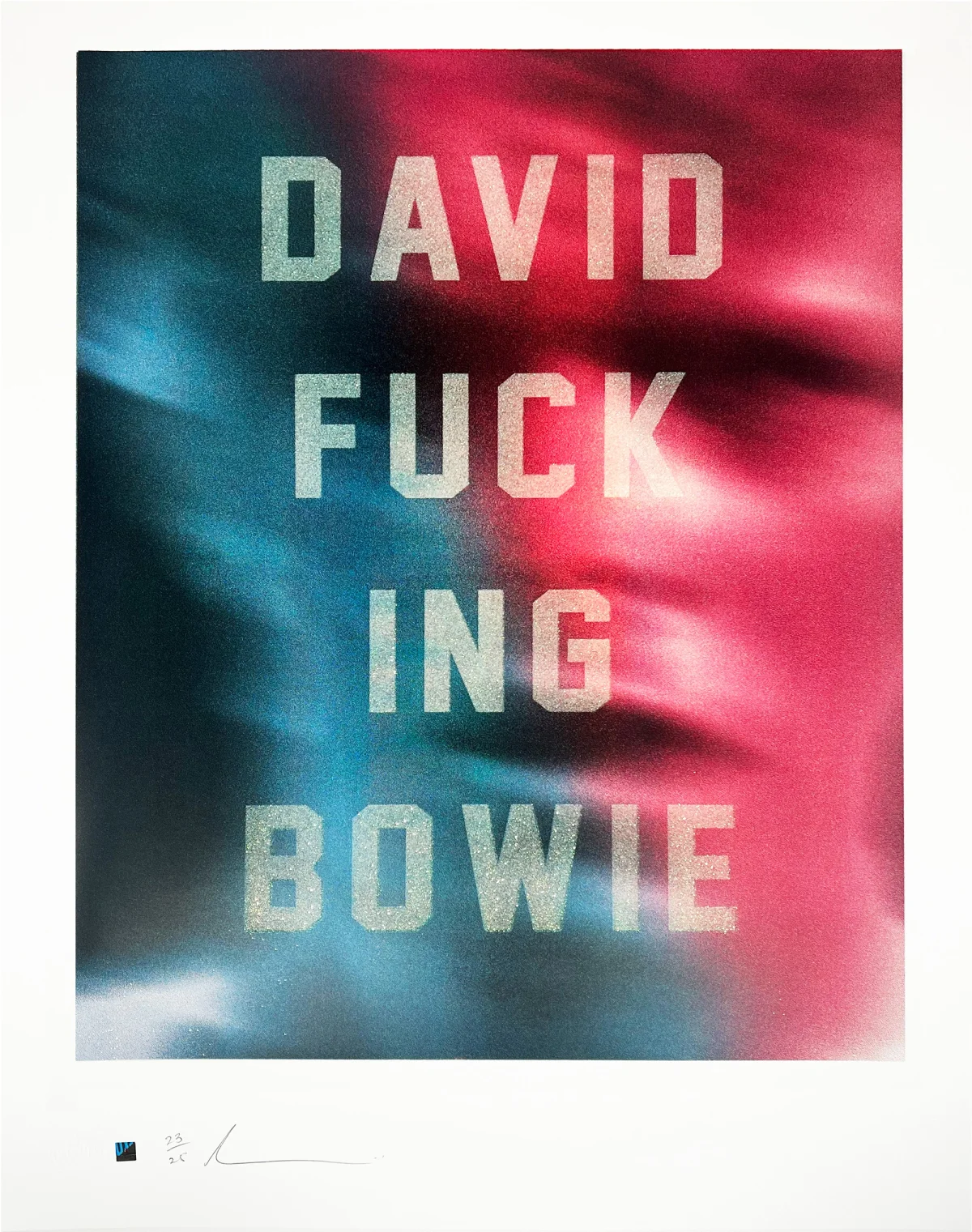
The work isn’t nostalgic. It isn’t decorative. It doesn’t soften Bowie’s legacy or wrap it in reverence. Instead, it does what Bowie himself often did it confronts you directly.
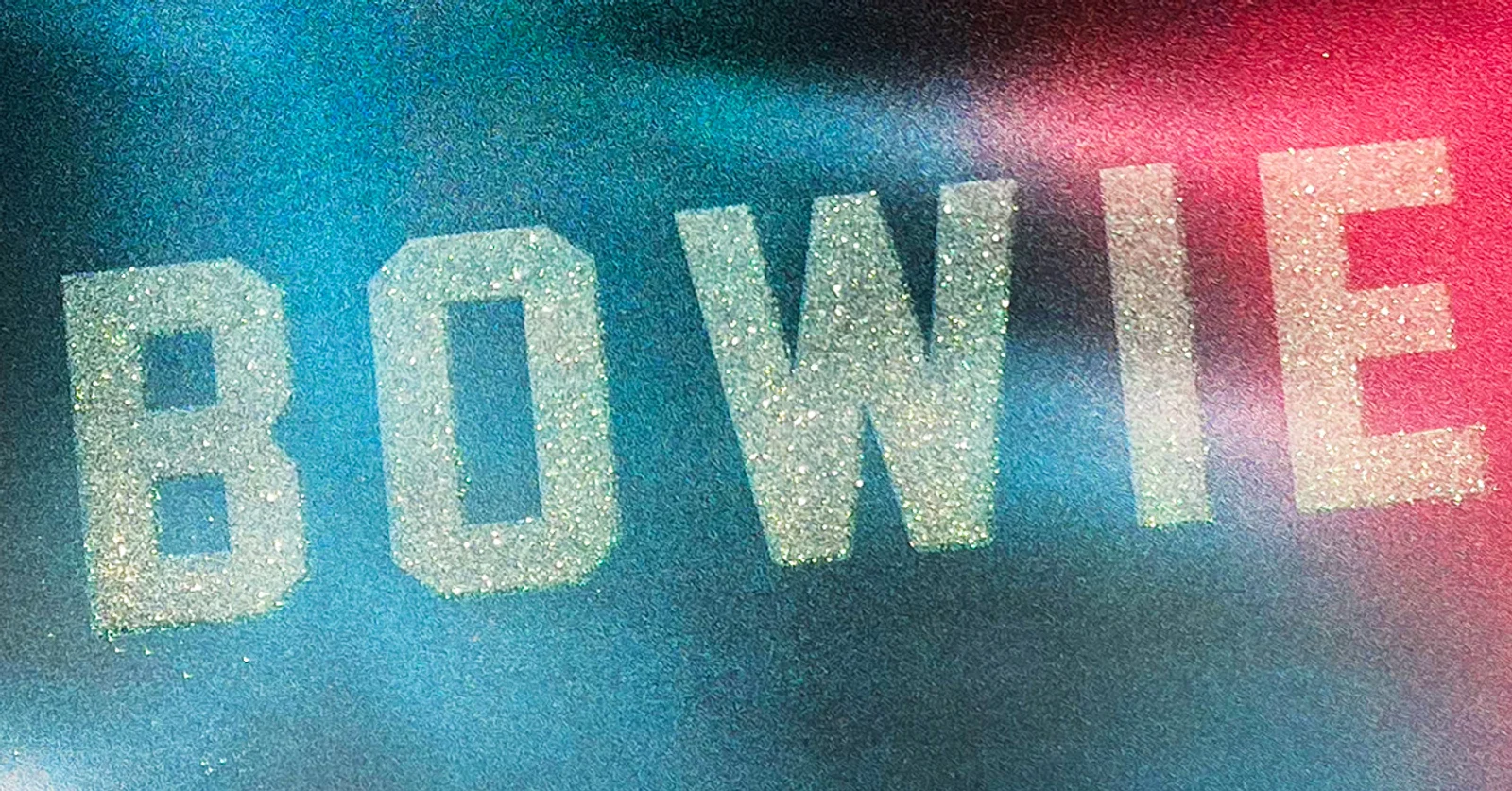
The language is blunt because Bowie was never polite. The typography is uncompromising because Bowie never asked for permission. The phrase itself feels less like a slogan and more like an assertion: a refusal to sanitise someone who fundamentally reshaped what modern creativity could look like.
At Electric Gallery, we believe legacy shouldn’t be frozen in amber. It should remain active, provocative, and occasionally uncomfortable.
Ten years after his death, and in the week that would have marked Bowie’s 79th birthday, his influence still feels ahead of us rather than behind us. Not a memory, but a benchmark.
This week, we are releasing a limited number of David Fucking Bowie prints by Dave Buonaguidi. Not as a tribute, but as a reminder of the standard Bowie set and the space he left behind.
Each print has a small section of the actual ticket stub sewn into the print, from the 1983 David Bowie show at Milton Keynes Bowl, attended by Buonaguidi.
Limited Edition Size: 25
Dimensions: 72x102cm
Medium: 4 Colour Screen Print with Diamond Dust Overlay on Monken Polar Smooth Crisp White 400gsm Paper
Price: £425